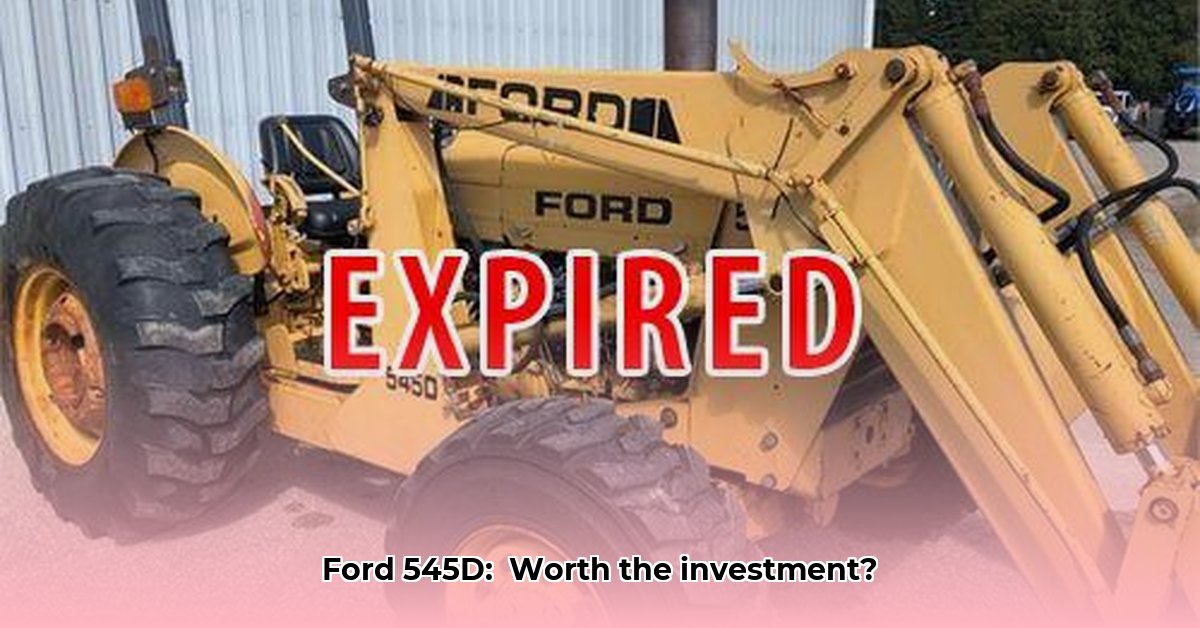
This comprehensive guide helps you navigate the world of Ford 545D tractors, whether you're buying, restoring, or sourcing parts. We'll cover everything from pre-purchase inspections to finding replacement parts and estimating market value. For more information on Ford tractors, check out this useful resource.
Assessing the Condition of a Used Ford 545D
Before purchasing a used Ford 545D, a thorough inspection is crucial. This isn't just a casual look-over; it's a systematic evaluation to identify potential problems. Think of it as a pre-purchase health check for your prospective tractor. What should you look for?
Fluid Levels and Leaks: Begin by checking all fluid levels: engine oil, transmission fluid, and hydraulic fluid. Leaks are a major red flag, indicating potential seal failures or other issues. Look carefully for any signs of oil, grease, or fluid stains around gaskets and joints.
Rust and Corrosion: Examine the tractor's body, frame, and components for rust and corrosion. This weakens metal and can lead to significant problems down the road. Focus on areas prone to moisture buildup.
Tire Condition: Inspect the tires for wear, tears, cracks, and proper inflation. Worn or damaged tires can affect performance and safety. Check the tread depth and sidewalls for any signs of deterioration.
Engine Function: Start the engine and listen carefully for any unusual noises. Knocking, whining, or clanking can indicate internal engine problems. A smoothly running engine should operate quietly.
Transmission and Hydraulics: Shift through the gears; any grinding or resistance is cause for concern. Test the hydraulics – check the lift capacity and look for leaks.
Pre-Purchase Inspection Checklist:
| Item | Inspect For | Action |
|---|---|---|
| Engine Compartment | Oil leaks, belt wear, corrosion | Note any issues; consider professional assessment |
| Transmission | Smooth shifting, leaks, responsiveness | Test all gears; listen for unusual sounds |
| Hydraulic System | Leaks, lift capacity | Operate all functions, check fluid levels |
| Tires | Wear, cracks, proper inflation | Measure tread depth; check pressure |
| Body and Frame | Damage, rust, corrosion | Note all significant damage |
| Fluids | Levels of engine oil, transmission fluid, and hydraulic fluid | Verify levels; look for leaks |
Parts Sourcing Strategies for Your Ford 545D
Finding parts for an older tractor can be challenging, but there are effective strategies to locate the components you need:
Online Marketplaces: Numerous online retailers specialize in agricultural equipment parts. These websites often have extensive catalogs and search functionality. Start your search here.
Salvage Yards: Salvage yards frequently have used parts available at discounted prices. Be prepared to search and potentially call multiple yards. A well-known parts supplier with an established online presence can ensure better availability.
Online Forums and Communities: Engage with online communities dedicated to vintage Ford tractors. Other enthusiasts often share parts sourcing tips and can connect you with suppliers. It’s beneficial to build relationships within these communities.
Local Mechanics and Dealers: Local mechanics and agricultural equipment dealers often have connections with suppliers and may be able to source parts you can't find elsewhere. This local resource may have rare and used parts.
Estimating the Market Value of Your Ford 545D
Several factors influence the value of a used Ford 545D:
Condition: The overall condition of the tractor (mechanical and cosmetic) significantly impacts its value. A well-maintained tractor will command a higher price.
Age: Older tractors generally depreciate more than newer models.
Accessories: Included accessories (e.g., loader, mower) increase the tractor’s value.
Rarity: Certain models or variations might appreciate in value due to their rarity.
To estimate the market value, consult online listings of comparable Ford 545D tractors. Consider condition, accessories, and age when comparing. Remember: the goal is to balance a fair price with your anticipated long-term use of the tractor.
Ford 545D Restoration Considerations
Restoring a Ford 545D is a substantial undertaking, requiring planning, skill, and patience. A detailed approach increases your chances of success.
Assessment: Begin by thoroughly assessing the tractor's condition, identifying all areas needing repair or restoration. Create a detailed list of required parts and materials.
Documentation: Keep a record of the restoration process, including photographs and notes. This documentation will aid your progress and serve as a valuable resource in the future. Careful record-keeping streamlines the process and promotes effective progress tracking.
Parts Sourcing: Use the parts sourcing strategies outlined above to acquire the necessary components. Remember to diligently compare prices and ensure quality.
Phased Approach: Break down the restoration into manageable phases. This approach reduces the project’s complexity and helps to avoid being overwhelmed by the task at hand.
Is a Ford 545D Tractor Right for You?
A Ford 545D offers the robustness of a well-built tractor with a reliable engine – but it also comes with potential challenges regarding parts availability and repair costs. Carefully weigh the pros and cons:
Pros:
- Durable construction
- Powerful 62 hp engine
- High lifting capacity (3080 lbs)
- Potential collector's item value
Cons:
- Parts can be difficult to source
- Repairs can be costly
- Restoration can be expensive and time-consuming
- Requires mechanical expertise
This guide provides a solid foundation for making an informed decision. Remember, thorough research and diligent inspections will pay off in the long run. Purchasing any used machinery requires careful consideration.